Latest Blog Posts

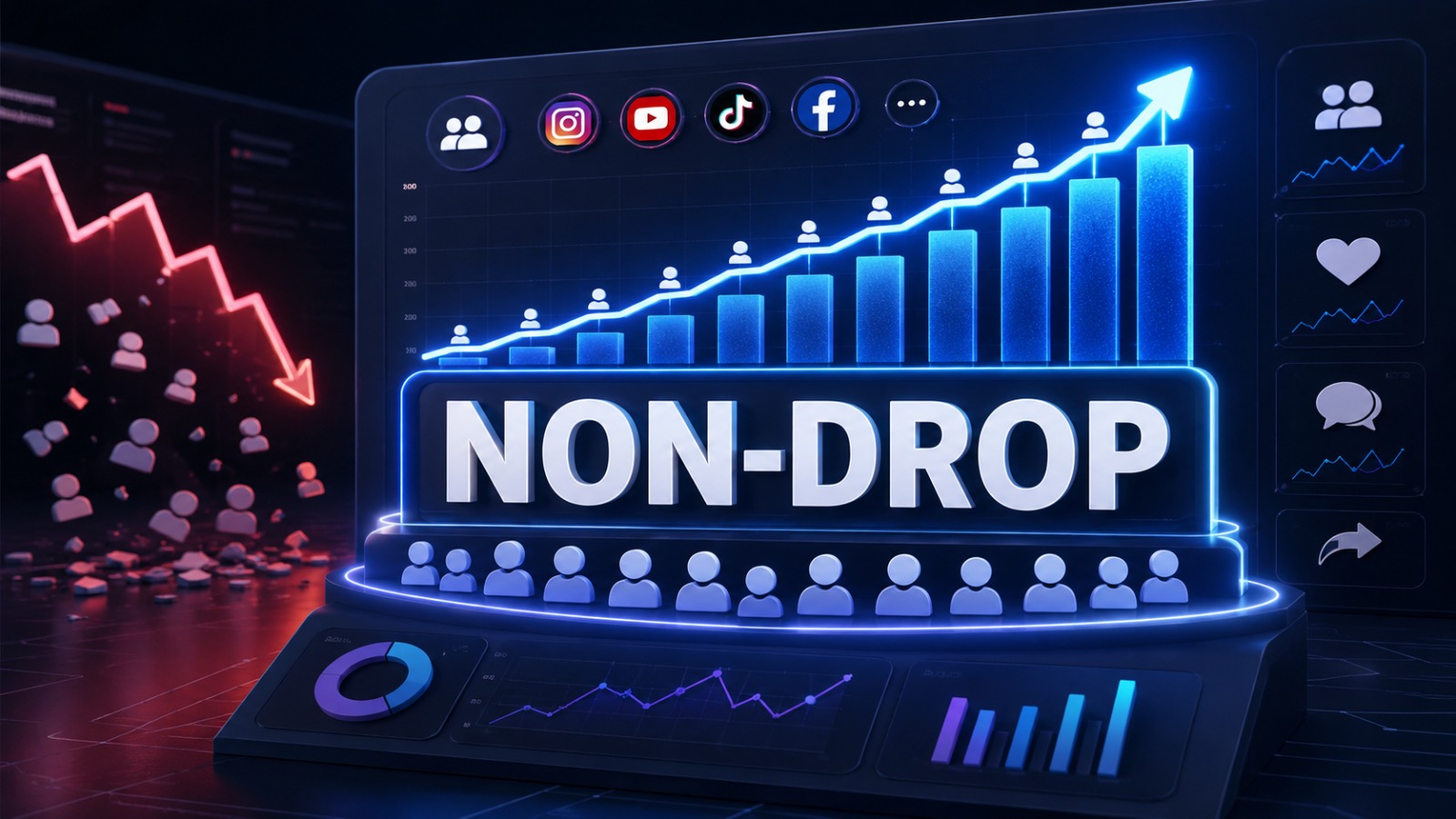
Non-Drop SMM Panel Explained: What Non-Drop Really Means in 2026

Quick Answer: A non-drop SMM panel is one where the followers, likes, views, or subscribers you buy hold close to their delivered count over time, instead of gradually disappearing as source accounts get removed or filtered out. It's a delivery-quality claim - it only means something if it's backed by a stated refill policy you can actually check.

"Non-drop" shows up on almost every SMM panel's homepage, and it means something slightly different on almost every one of them. If you've bought Instagram followers, YouTube subscribers, or Telegram members before and watched the number quietly shrink a few weeks later, you already know why the term matters more than the price tag next to it.

This guide breaks down what non-drop actually means, why engagement drops in the first place, how it's different from a refill guarantee or a lifetime guarantee, and the specific things to check on any panel - this one included - before you place an order.

Table of Contents

  • What Is a Non-Drop SMM Panel?

  • How Non-Drop Delivery Actually Works

  • Why Followers, Likes, and Views Drop in the First Place

  • Non-Drop vs. Refill Guarantee vs. Lifetime Guarantee

  • Non-Drop Services: Pros and Cons

  • How to Verify a Non-Drop Claim Before You Buy

  • Red Flags: When "Non-Drop" Is Just a Marketing Word

  • Common Mistakes to Avoid

  • Non-Drop by Platform

  • A Note for Agencies and Resellers

  • How Long Should a Non-Drop Guarantee Actually Last?

  • Key Takeaways

  • FAQ

  • Conclusion

What Is a Non-Drop SMM Panel?

A non-drop SMM panel is a service where the engagement you purchase is sourced and delivered in a way meant to hold steady after delivery, instead of decaying as the accounts behind it get purged, banned, or manually unfollowed. On its own, "non-drop" is a claim about delivery quality - not a legal guarantee - unless the panel backs it with a written refill or replacement policy you can point to.

The term exists because the alternative is the industry's default outcome, not the exception. A large share of cheap engagement online is sourced from low-quality account networks: empty profiles, mass-created bot accounts, or short-lived engagement farms. Every major platform runs periodic integrity sweeps that catch exactly these kinds of accounts. When that happens, every follower, like, or view tied to a removed account disappears from your count - sometimes within days, sometimes in one visible drop months later.

"Non-drop" is a panel's claim that its delivery method avoids that outcome, usually because it draws from accounts that don't match the patterns platforms filter for.

Factor Drop-Prone Engagement Non-Drop Engagement
Source accounts Freshly created, empty, bot-pattern profiles Aged accounts with an activity history
Delivery speed Instant, delivered in one bulk batch Gradual, spread across hours or days
Platform detection risk High - matches known automated-account signatures Lower - mimics an organic growth curve
Typical 30-day outcome Noticeable, often sudden decline Relatively stable, with normal minor fluctuation
Backed by a guarantee Rarely, or only for a very short window Usually a refill or replacement policy, typically 30 days or more

How Non-Drop Delivery Actually Works

Non-drop delivery comes down to two things working together: the quality of the source accounts, and the pace at which the order is delivered. Neither one alone is enough.

Account quality matters because platforms don't just check whether an account exists - they check whether it behaves like a real one. Accounts with a profile photo, some post or watch history, and normal login patterns are far less likely to get swept up in a purge than accounts created in bulk with no activity behind them. A panel sourcing from the first group has a structural advantage before delivery even starts.

Pacing matters just as much. A sudden jump of thousands of followers or subscribers in a few minutes is one of the clearest signals platforms use to flag inauthentic activity - not just on the follower's side, but on your account too. Gradual, drip-style delivery that spreads an order over several hours or days looks closer to how audiences actually grow, which reduces the odds of the whole batch getting caught and removed at once.

The last piece is monitoring. A panel that actually tracks delivered orders and triggers a refill automatically when a count slips is doing something meaningfully different from one that just uses "non-drop" as a label and hopes you don't check back.

Why Followers, Likes, and Views Drop in the First Place

Engagement drops for one of three reasons: the platform removed the account behind it, the account was never capable of sticking around, or the panel quietly reduced what it delivered.

Platform integrity sweeps: Instagram, YouTube, and Meta all run ongoing efforts to identify and remove fake, spam, or inactive accounts - this is publicly documented platform policy, not a rumor. When one of these accounts was following you, watching your videos, or liking your posts, its removal takes your number down with it. This is the single biggest cause of visible drops, and it's largely outside any panel's control once the account already exists.

Low-quality or bot-only sourcing: Some of the cheapest services never used real accounts to begin with - the count you saw immediately after ordering was never going to hold, because there was nothing durable behind it. This is the exact scenario "non-drop" claims are meant to prevent, and it's also the one cheap panels are least equipped to prevent.

Panel-side throttling: Less talked about, but real: some providers deliver the full order, then quietly let a portion lapse over time because replacing it costs them money - and a guarantee window that's short enough (three or seven days) can expire before most of the natural drop even happens. A 30-day window catches far more of this than a 7-day one does.

Non-Drop vs. Refill Guarantee vs. Lifetime Guarantee

These three terms get used almost interchangeably, but they describe different things. Non-drop describes an intended outcome. Refill describes the remedy if that outcome doesn't hold. Lifetime describes how long the remedy applies for.

Term What It Actually Promises What It Doesn't Promise
Non-Drop The delivered count is expected to hold steady over time Nothing, if there's no refill policy attached to back it up
Refill Guarantee If the count drops within a stated window, the panel replaces the loss Doesn't prevent the drop from happening in the first place
Lifetime Guarantee The refill promise applies indefinitely, not just for a set window Genuinely rare - always check whether "lifetime" means the order's lifetime or an unlimited time period
No-Refill / Budget Tier The lowest price for the service No replacement at all if numbers fall - the risk sits entirely with the buyer

If a panel only shows you the word "non-drop" and nothing about what happens if it doesn't hold, treat it as marketing copy until you find the actual policy.

Non-Drop Services: Pros and Cons

Non-drop isn't automatically the right choice for every order. It's a trade-off, and it's worth seeing both sides before you pay a premium for it.

Pros:

  • Fewer visible drops means fewer support tickets and refill requests to chase down later

  • A stable count reads as organic growth; a count that spikes, drops, then quietly refills reads as purchased the moment anyone checks twice

  • Better foundation for brand partnerships - sponsors who look at your profile weeks after you order see consistent numbers, not a number that's already partly faded

Cons:

  • Costs more per unit than budget or no-refill services, because quality sourcing and active monitoring aren't free

  • Still not immune to platform-wide policy changes - a non-drop guarantee reflects today's detection systems, not a permanent state

  • Slower delivery, since gradual pacing is part of what makes it non-drop in the first place - not the right fit if you need an instant, one-time spike for a specific moment

How to Verify a Non-Drop Claim Before You Buy

You don't have to take any panel's word for it. A few checks take less time than placing the order itself:

  • Find the stated guarantee window in days. "Non-drop" without a number attached to it isn't a policy, it's an adjective.

  • Check whether the refill is automatic or manual. A system that monitors orders and refills on its own is a different product from one that requires you to notice the drop and file a ticket.

  • Ask about delivery speed. Gradual, drip delivery over hours or days is a good sign. Instant bulk delivery of a "non-drop" order is often a contradiction - real-looking growth doesn't arrive all at once.

  • Search the panel's name alongside "drop" or "refund" on a forum like BlackHatWorld or Reddit before ordering. Independent user reports tell you more than homepage copy ever will.

  • Start small. Place a test order before committing to a large one, then check the count again at 7 days and again at 30 days.

  • Read what the panel says happens after the guarantee window ends. A panel that's upfront about some natural decline being normal, even on quality delivery, is usually more trustworthy than one that implies the number will never move.

Red Flags: When "Non-Drop" Is Just a Marketing Word

A few patterns show up consistently on panels where "non-drop" doesn't hold up in practice:

  • No refill window stated anywhere in the terms, only the word "non-drop" on the service page

  • Refill requires opening a support ticket and waiting days, with no automatic monitoring behind it

  • Pricing sits far below the rest of the market for the same platform and quantity - quality delivery has a cost floor, and a price well under it usually means the sourcing is cheaper too

  • No gradual or drip delivery option at all - instant delivery of a large order is one of the easier things for a platform to detect

  • The guarantee language on the homepage doesn't match what's actually written in the terms of service

Common Mistakes to Avoid

Most of the frustration with non-drop services traces back to buyer habits, not just panel quality:

  • Ordering the biggest package first: A large order that turns out to be low quality is a large loss. Test small, then scale once you trust the delivery.

  • Reading only the homepage, not the terms page: Marketing copy and the actual refill policy don't always match - check both before you decide the claim is real.

  • Ordering the same day you need results, with no buffer: If gradual delivery takes days, buying right before a launch defeats the purpose of the pacing that makes it non-drop-friendly in the first place.

  • Treating reviews hosted on the panel's own site as independent proof: Third-party forums and review platforms carry more weight than testimonials the panel controls.

  • Never checking back once the guarantee window passes: The entire point of a stated window is that it gives you a date to actually look. Skipping that check means you'd never know whether the policy was real.

Non-Drop by Platform

What counts as a "drop," and how long a non-drop claim realistically holds, changes by platform - because each one runs its own account-integrity systems on its own schedule.

Platform Typical Cause of Drop Realistic Non-Drop Window
Instagram Periodic fake-account purges and inactive-account cleanup 30 days is the common baseline across the industry
YouTube Subscriber and watch-time quality checks tied to monetization review 30 days, sometimes longer for subscriber-specific orders
Telegram Platform restrictions on bulk-added group and channel members Often shorter, 15–30 days, since Telegram's own rules shift periodically
Facebook Slower purge cycles than Instagram, but Page-level fake-account sweeps still happen 30–60 days is typical
TikTok Aggressive bot detection tied to the For You Page algorithm Usually the shortest realistic window of the five

SMM Quality's own Instagram and YouTube services, for example, trigger an automatic refill when a count drops more than 5% within a 30-day window.

A Note for Agencies and Resellers

Agencies managing multiple client accounts carry a different risk than a single creator buying for themselves. A drop on your own profile is annoying. A drop on a client's account that the client notices before you do is a trust problem - and potentially a client you lose.

If you're placing orders on behalf of clients, automatic refill monitoring matters more than it does for a solo buyer, simply because nobody's checking every client account by hand every day. Panels that expose refill status through an API, rather than requiring a manual dashboard check per account, save real time once you're managing more than a handful of clients at once.

How Long Should a Non-Drop Guarantee Actually Last?

Thirty days is the realistic industry baseline, because that's roughly the window in which most platform-side purges surface. Anything under seven days barely covers the platform's own detection cycle, which means the guarantee can expire before the drop it's meant to protect against even happens.

Lifetime guarantees exist, but they're less common than the label suggests. "Lifetime" sometimes means the lifetime of that specific order rather than an unlimited time period - worth reading the actual wording rather than assuming the broadest interpretation.

Key Takeaways

  • Non-drop describes an intended outcome, not a guarantee - the guarantee is whatever refill policy is actually attached to it

  • Real non-drop delivery depends on source-account quality and delivery pacing, not the word on the homepage

  • 30 days is the realistic verification window; shorter windows often just hide the drop until after most buyers have stopped checking

  • Confirm the refill trigger is automatic before you buy, not something you'd have to notice and fight for

Frequently Asked Questions

Q: What does "non-drop" mean on an SMM panel?

A: It means the followers, likes, views, or subscribers you buy are expected to hold close to their delivered count over time, rather than declining as source accounts get removed by the platform.

Q: Is non-drop the same as a refill guarantee?

A: No. Non-drop describes the expected outcome; a refill guarantee is the specific remedy - replacing lost engagement - if that outcome doesn't hold.

Q: Why do Instagram followers drop after I buy them?

A: Most commonly because the accounts behind them get removed in one of Instagram's periodic fake or inactive-account sweeps, not because of anything you did.

Q: How long does a non-drop guarantee usually last?

A: Thirty days is the standard window across most reputable panels. Shorter windows exist but cover less of the time in which drops actually surface.

Q: Can a panel really guarantee followers will never drop?

A: No panel can guarantee zero drop forever - platforms change their detection systems over time. What a panel can reasonably guarantee is a refill if the count falls within a stated window.

Q: What's the difference between non-drop and lifetime refill?

A: Non-drop describes delivery quality. Lifetime refill is a specific, longer-duration version of a refill guarantee - check whether "lifetime" applies to the order or is genuinely unlimited.

Q: Do non-drop YouTube subscribers count toward monetization?

A: Subscriber quality is part of what YouTube reviews during monetization checks, so subscribers sourced from real, active-looking accounts are the safer choice over bot-based delivery - the delivery method matters here, not just the subscriber count.

Q: How do I check if a panel's non-drop claim is real before ordering?

A: Look for a stated refill window in the terms, confirm whether the refill is automatic, check for gradual delivery options, and search the panel's name alongside "drop" on independent forums before you order.

Q: Why do some non-drop packages cost more than regular ones?

A: Because sourcing from higher-quality, more active-looking accounts and monitoring orders for refills both cost the panel more than instant bulk delivery from bot networks.

Q: Does gradual delivery affect whether followers drop?

A: Yes. Gradual delivery mimics organic growth patterns and is less likely to trigger the platform detection systems that lead to bulk removals later.

Q: What happens after my non-drop guarantee window ends?

A: Some natural fluctuation is normal on any account, panel or not. A trustworthy panel is upfront that the guarantee window is a verification period, not a claim that the count is frozen forever.

Q: Is "no-refill" the same as "not non-drop"?

A: Not exactly - a no-refill package might still be sourced reasonably well, but you carry the full risk if it does drop, since there's no policy to fall back on.

Q: Can Telegram members be non-drop the same way Instagram followers are?

A: The concept is the same, but the realistic window tends to be shorter, since Telegram periodically tightens its own rules around bulk-added members.

Q: Should I start with a small order to test a non-drop claim?

A: Yes. A small test order lets you check the count at 7 and 30 days with minimal cost before committing to a larger package.

Q: Does a non-drop guarantee protect my account from being banned?

A: No - non-drop is about the engagement count holding steady, not about your account's safety. Account safety depends more on delivery pacing and source quality, which is worth asking about separately.

Conclusion

"Non-drop" is a useful term the moment it's backed by something concrete - a stated window, an automatic refill trigger, and a delivery method that doesn't rely on accounts platforms are actively removing. Without those three things, it's just a word on a homepage.

Before your next order, on this panel or any other, check the actual policy rather than the label. If you're comparing options across platforms, SMM Quality's services page lists the refill terms for each service alongside the package details, so you can see the policy before you pay rather than after the count moves.

By Vivek Mishra | SEO Specialist and Digital Marketing Strategist | ~12 min read
Read More

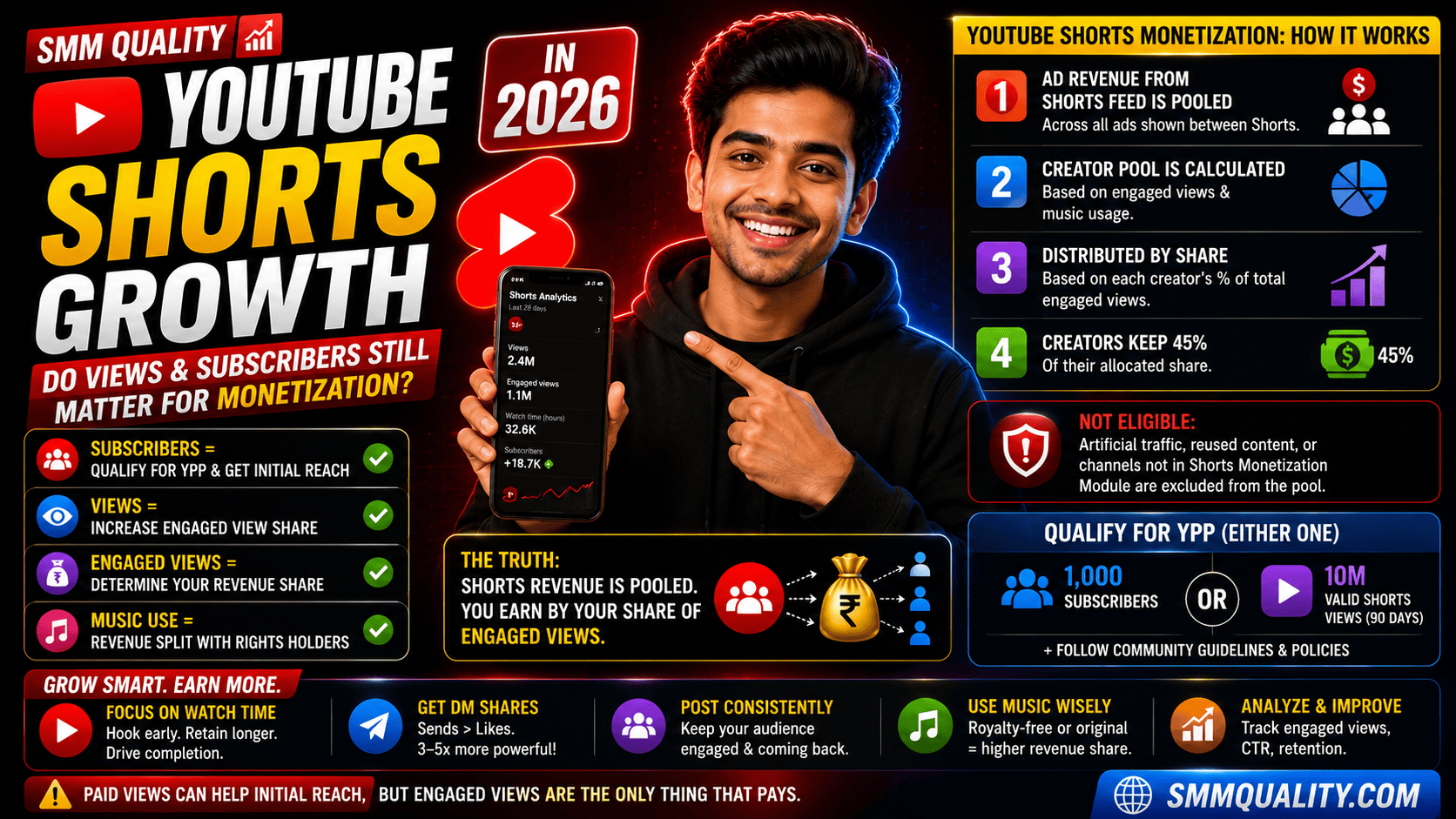
YouTube Shorts Growth in 2026: Do Views and Subscribers Still Matter for Monetization?

Quick Answer: Yes, but through a mechanism many creators misunderstand. YouTube's own Help Center documentation confirms Shorts revenue is calculated through a pooled model: ad revenue from the Shorts feed is combined monthly, then distributed to monetizing creators based on each creator's share of total eligible views - not a per-view rate on individual Shorts. Subscribers and long-form watch hours matter for a separate reason: they're one of two paths to qualifying for the YouTube Partner Program in the first place, alongside a views-based Shorts-specific threshold.

What YouTube Has Actually Confirmed About Shorts Monetization

This is one of the more reliably documented corners of the creator economy, since YouTube publishes the mechanics directly rather than leaving them to third-party inference. According to YouTube's own Shorts monetization policy documentation, the process works in four confirmed steps:

  • Ad revenue from the Shorts feed is pooled monthly - combined across all ads shown between Shorts, rather than tied to any individual video.

  • The Creator Pool is calculated from that pooled revenue, allocated based on engaged views and music usage across all monetizing creators' Shorts.

  • Revenue is distributed by share of total engaged views - if a creator's Shorts account for 5% of all eligible engaged views from monetizing creators in a given country that month, they receive 5% of that country's Creator Pool.

  • Monetizing creators keep 45% of their allocated share, regardless of whether music was used, per YouTube's published policy.

Views from artificial traffic, reused or unmodified content, or channels that haven't yet accepted the Shorts Monetization Module are explicitly excluded from the pool by policy - they don't count toward a creator's share and don't dilute anyone else's.

Qualification vs. Revenue Calculation: Two Different Things

A lot of confusion in this space comes from conflating qualifying for monetization with how much a Short earns once qualified. They're governed by different mechanics.

Qualification requires reaching the YouTube Partner Program threshold - 1,000 subscribers plus either 4,000 valid public watch hours on long-form content in the past 12 months, or a Shorts-specific views threshold in the last 90 days, per YouTube's current published requirements. Only one of these two paths is needed, not both.

Revenue calculation, once qualified, runs entirely on the pooled Creator Pool model above - completely separate from the subscriber count that got a creator into the program in the first place.

This means subscriber count and watch hours matter for getting in the door, and engaged view share matters for how much comes through it - two different gates, not one continuous scale.

Why Subscribers Still Matter Even Though Revenue Is View-Pooled

Given the pooled model, it's fair to ask why subscriber count would matter at all beyond initial qualification. Two real reasons:

First-hour distribution still runs through existing subscribers. A Short is shown to subscribers first, and their early watch behavior remains a meaningful input into whether YouTube's recommendation system tests it more broadly - independent of how Shorts revenue itself gets calculated afterward.

Engaged views, not raw views, are what count toward the pool. YouTube's documentation is specific that only engaged views from real users count - this is a distinction that matters directly for anyone considering a paid visibility service, since the pooled model has no mechanism to reward view count that doesn't reflect genuine engagement. A modest boost to a new Short's early view count can help it clear the same cold-start visibility problem long-form content faces, but it does nothing to inflate actual Creator Pool earnings, because ineligible or non-engaged views are explicitly excluded from the revenue calculation by policy.

What Actually Drives a Short's Distribution (Separate From Revenue)

Factor Role
Early watch-through rate Strong input into whether YouTube tests a Short more broadly
Music usage Reduces the Creator Pool allocation for that Short specifically, per YouTube's revenue-split policy - an economic factor, not a distribution one
Engaged view share Directly determines revenue once in the Partner Program
Subscriber base Drives first-hour reach; separate from the revenue pool mechanic

A Point Worth Being Direct About

Because YouTube's own policy explicitly excludes non-engaged and ineligible views from the Creator Pool calculation, there's no revenue-side incentive to inflate Shorts view counts artificially - it doesn't move the actual number that matters. The one place a modest visibility service plausibly helps is the same cold-start problem long-form content face: giving a new Short's first hour enough activity to get a fair shot at YouTube's initial distribution test, not to affect the payout calculation, which runs on engaged views specifically and by design resists exactly that kind of inflation.

How to Check This Against Your Own Channel

YouTube Studio exposes the relevant data directly, so this is checkable rather than taken on faith:

  • Check "Shorts feed engaged views" versus total views for a recent Short in Studio's analytics. A large gap between the two is the flagged signal for content that isn't being counted toward the revenue pool, regardless of raw view count.

  • Review the Shorts Monetization Module acceptance date against your earliest monetized Shorts - views before acceptance don't retroactively qualify, per YouTube's own policy, which is a common source of confusion when creators check their first payout and it's lower than expected.

  • Compare RPM between a Short using licensed music and one using original audio or the royalty-free library, over a similar view count. The gap reflects the revenue split with music partners described in YouTube's own policy, not a ranking penalty.

This kind of direct check against Studio data is a more reliable basis for strategy than any general guide, including this one, since the actual numbers are already sitting in the dashboard.

Practical Strategy Given How the Mechanics Actually Work

  • Treat Shorts monetization as two separate goals - qualifying for YPP (subscriber/watch-hour threshold) and maximizing engaged view share afterward (content and consistency, not view count alone).

  • Skip trending licensed music if maximizing per-Short revenue matters, since YouTube's own policy confirms music usage reduces that Short's Creator Pool allocation specifically.

  • Don't expect a visibility boost to move the revenue needle. It can help a new Short clear its first-hour test; it cannot inflate engaged-view share, which is explicitly filtered against exactly that kind of pattern by policy.

  • Pair Shorts with long-form content deliberately rather than treating them as separate strategies - Shorts revenue is pooled and comparatively low per-view; long-form retains the traditional 55% creator revenue share on individually-placed ads, a materially different economic model worth understanding rather than assuming Shorts operate the same way.

Frequently Asked Questions

Q: Do YouTube Shorts require 4,000 watch hours to monetize?

A: No - Shorts have a separate views-based qualification path; a channel needs either the traditional watch-hours threshold or a Shorts-specific engaged-views threshold, not both, per YouTube's current published requirements.

Q: Does a paid visibility boost increase Shorts ad revenue directly?

A: No, based on YouTube's own documented mechanics. Revenue is calculated from engaged, eligible views specifically; non-engaged and ineligible views are explicitly excluded from the Creator Pool by policy.

Q: Why do subscribers matter if revenue is pooled by view share?

A: Subscribers drive a Short's first-hour distribution and are one of two paths to Partner Program qualification in the first place - a separate function from the revenue-pooling mechanic that applies afterward.

Q: Does using licensed music in a Short reduce earnings?

A: Yes - per YouTube's own Shorts monetization policy, revenue from a Short using licensed music is split between the Creator Pool and music rights holders before the creator's 45% share is calculated.

Q: Can a channel build real income from Shorts alone?

A: Technically yes, but the pooled, low-per-view economics mean most creators use Shorts primarily to grow subscriber base and drive traffic toward long-form content, where the traditional, higher per-video revenue share applies.

Sparkhouse manages content for SMMquality; that relationship is disclosed above. Claims about platform ranking signals are sourced to YouTube's own public statements where possible, with third-party or leaked-document claims clearly distinguished from confirmed platform policy.

By Ishita Ghai | SEO Specialist, Sparkhouse
Disclosure: Sparkhouse manages content and marketing for SMMquality. Website: smmquality.com

Read More

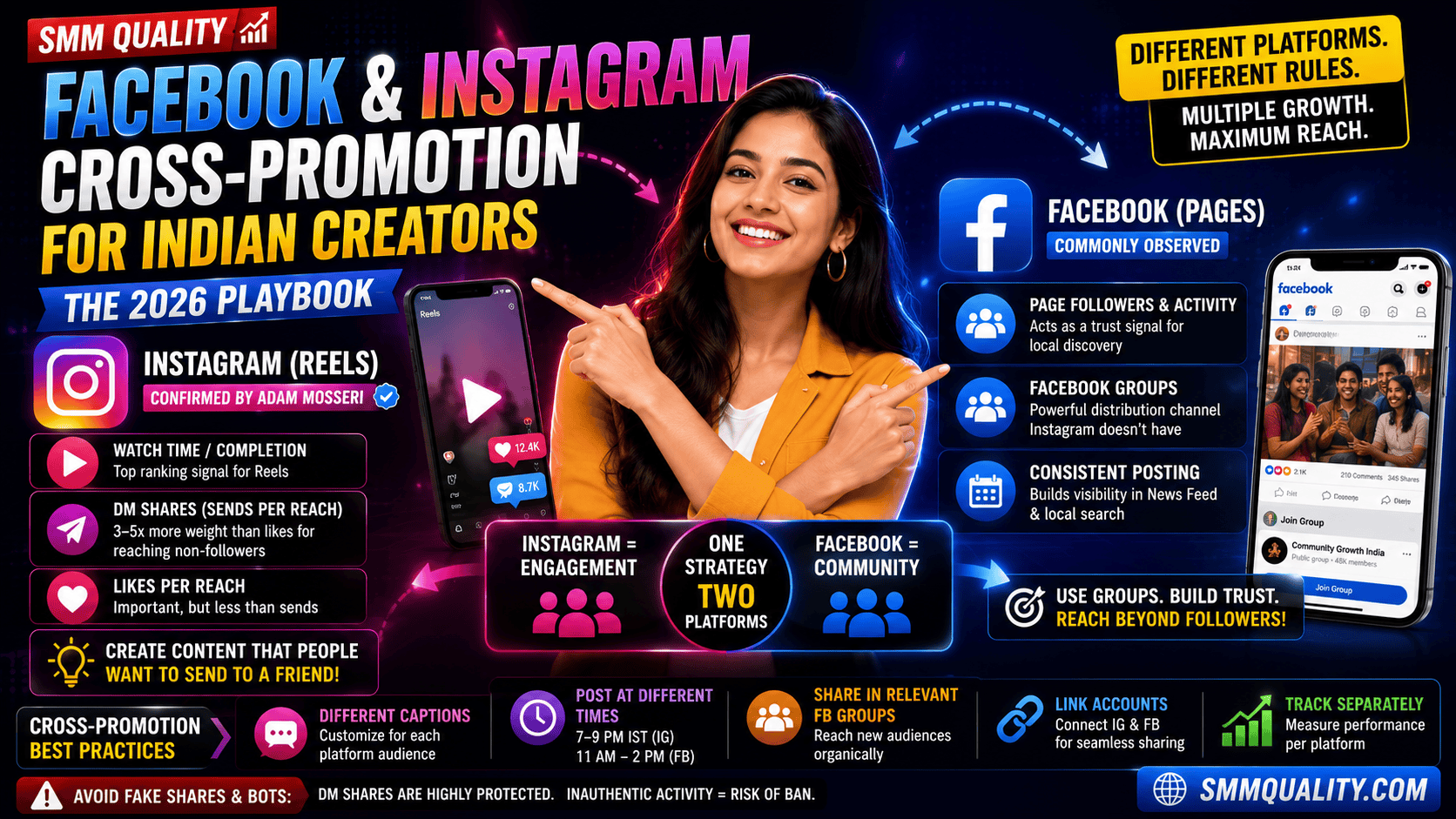
Facebook & Instagram Cross-Promotion for Indian Creators: The 2026 Playbook

Quick Answer: Instagram and Facebook run on genuinely different ranking logic in 2026, which is why identical cross-posting under-performs on both. Instagram's own leadership has publicly confirmed that watch time, DM shares ("sends per reach"), and likes-per-reach are the platform's top Reels ranking signals - with sends weighted several times higher than likes for reaching non-followers. Facebook, by contrast, still leans more heavily on follower count and Page activity as trust signals for local discovery. Treating the two as one platform with two names is the main reason cross-promotion underperforms.

Why Identical Cross-Posting Falls Short

The common approach - same caption, same timing, same content, posted to both platforms - is cross-posting, not cross-promotion. It leaves reach on the table because the two platforms are optimizing for measurably different things.

Instagram's head, Adam Mosseri, has stated publicly and repeatedly (through Instagram's own Creators channel and public interviews) that watch time, sends per reach, and likes per reach are the platform's core ranking signals across Reels and Explore, with DM shares carrying meaningfully more weight than likes specifically for reaching people who don't already follow an account. This is now one of the more consistently corroborated claims in the social platform commentary space, reported the same way across a wide range of independent sources rather than traced to a single unverified guide.

Facebook has not made an equivalent, as-public a statement about its own Page-discovery weighting in 2026. What's observable instead, across marketing and business-use reporting, is that Facebook's local search and Page discovery systems continue to lean on Page follower count and posting consistency as trust signals - a genuinely different mechanic from Instagram's engagement-ratio-driven Reels system, even without an equivalent named public confirmation from Meta's Facebook team specifically.

What Each Platform Is Actually Optimizing For

Signal Instagram (confirmed by Mosseri) Facebook (commonly observed, less publicly detailed)
Watch time / completion Confirmed top signal for Reels Relevant, not confirmed as dominant
DM shares / sends Confirmed 3–5x weight vs. likes for non-follower reach No public equivalent confirmed
Follower/Page count Secondary to engagement ratio Functions more directly as a local-search trust signal
Groups distribution No group equivalent A distribution channel Instagram doesn't have
Original vs. reposted content Explicitly down-ranked if reposted/watermarked, per Mosseri Less publicly detailed

A Cross-Promotion Structure That Reflects the Difference

  • Link the accounts properly first: Baseline, and still frequently skipped - a fully connected Instagram-to-Facebook Page link lets Reels publish to both without duplicate uploads.

  • Don't caption identically: Since Instagram's own confirmed priority is earning a DM share, captions there should be written to prompt "who would I send this to" - a specific, shareable hook. Facebook captions can carry more context, since Facebook audiences (especially outside metro India) tend to engage with longer-form captions than Instagram's terser style rewards.

  • Use Facebook Groups as a channel Instagram simply doesn't have: Sharing into 2–3 relevant Groups reaches an audience segment no Instagram ranking system touches, regardless of how well a Reel performs there.

  • Time posts separately rather than simultaneously: Reels in India commonly perform best in the 7–9 PM IST window; Facebook engagement in Tier-2/3 markets tends to skew earlier and around midday. Worth testing per-platform rather than assuming one schedule fits both.

  • Design specifically for the send-to-a-friend moment on Instagram: Given Mosseri's confirmed weighting, the practical creative question for Instagram content isn't "is this good" - it's "who would someone actually send this to." That's a different creative brief than "make something likeable," and it's worth treating as one.

A Point Worth Being Direct About

Instagram's systems are explicitly built to detect inauthentic engagement, and purchased or bot-driven shares in particular carry real account-level risk, since sends are the signal Instagram has confirmed it weighs most heavily for reach - a signal built around genuine, one-to-one recommendation, not one that tolerates being gamed well. This is a case where a modest visibility service (like SMMquality's Instagram views, used narrowly to help a new Reel clear an initial low-traction hurdle) is a fundamentally different and lower-risk category of action than attempting to inflate the DM-share signal itself, which isn't something we'd recommend attempting at all.

Where This Matters Specifically for Tier-2/3 India

Facebook remains the primary internet experience for a large share of non-metro Indian users, which makes Facebook Page growth a distinct strategic priority - not a redundant one - for businesses and creators targeting those markets specifically. Under-investing in Facebook while concentrating entirely on Instagram Reels means missing the audience segment where Facebook's local-discovery weighting matters most.

How to Check This Against Your Own Accounts

Since both platforms expose relevant metrics directly in their own Insights dashboards, this is checkable against real data rather than taken on faith:

  • On Instagram, pull "Sends" from a Reel's Insights and compare it against likes as a ratio, not a raw count. Given Mosseri's confirmed weighting, a Reel with a strong send ratio relative to reach is a better predictor of continued distribution than one with high likes but low sends.

  • On Facebook, check Page Insights for the split between follower reach and non-follower reach on recent posts. If non-follower reach is consistently low relative to follower count, that's a signal the Page hasn't crossed the local-discovery thresholds that come with more consistent posting activity.

  • Track engagement separately by platform for the same piece of content, rather than looking at combined totals. A cross-posted Reel performing well on Instagram and poorly on Facebook (or vice versa) is telling you something specific about audience mismatch, not that the content itself failed.

This kind of platform-native metric check is a more reliable basis for deciding where to invest effort than any general playbook, including this one - the data is already sitting in both dashboards.

Common Cross-Promotion Mistakes

  • Posting identical captions and hashtags to both platforms

  • Ignoring Facebook Groups as a distribution channel entirely

  • Assuming Instagram follower growth translates automatically to Facebook Page growth

  • Not tracking engagement separately per platform, which hides which one is actually underperforming

Frequently Asked Questions

Q: What has Instagram actually confirmed about its ranking signals in 2026?

A: Instagram's Head, Adam Mosseri, has publicly and repeatedly confirmed watch time, sends per reach (DM shares), and likes per reach as the platform's top signals, with sends weighted several times higher than likes specifically for reaching non-followers.

Q: Should Reels post to Instagram and Facebook at the same time?

A: Not necessarily - testing separate posting windows based on when each specific audience is active tends to outperform simultaneous posting.

Q: Does growing Instagram followers help Facebook Page growth automatically?

A: Only marginally, through basic profile cross-links. The audiences don't overlap as much as commonly assumed, especially across metro/non-metro lines.

Q: Is it safe to try to boost DM shares directly through a paid service?

A: No - this is the one signal worth explicitly avoiding any paid manipulation of, since it's the specific mechanism Instagram's systems are built to protect and detect interference with. A modest visibility boost on view count for a new upload is a different and lower-risk category of action than attempting to inflate the share signal itself.

Q: What's the single highest-ROI cross-promotion tactic for Indian creators specifically?

A: Sharing Reels into relevant Facebook Groups - a distribution channel with no Instagram equivalent, and one frequently skipped entirely in favor of duplicate posting.

Sparkhouse manages content for SMMquality; that relationship is disclosed above. Claims about Instagram's ranking signals are sourced to Instagram's own leadership's public statements, consistently corroborated across independent reporting; claims about Facebook's discovery weighting are noted as commonly observed rather than equivalently confirmed by Meta, since no comparable public statement from Facebook's own team was found.

By Sparkhouse | SEO Specialist, Sparkhouse
Disclosure: Sparkhouse manages content and marketing for SMMquality. Website: smmquality.com

Read More

SMM Panel vs. Organic Growth: What Actually Moves the Algorithm in 2026

Quick Answer: Neither SMM services nor organic content alone reliably drives growth on today's platforms. YouTube has publicly confirmed that viewer satisfaction - not raw watch time - is now the dominant signal in its recommendation system, based on statements from the platform's own creator liaison team. That shift matters directly to this question: a purchased view or follower can help a new account clear its first visibility hurdle, but it can't manufacture the satisfaction signal that determines whether the platform keeps recommending the content afterward.

The Question Creators Actually Ask

"Should I use an SMM panel, or just focus on content?" is common enough that it's worth answering honestly rather than picking a side that happens to be convenient for a company selling SMM services.

The honest answer: they solve different problems, and treating them as substitutes for each other is the actual mistake, regardless of which one someone leans on.

What Platforms Have Actually Confirmed About Their Own Ranking Signals

It's worth separating what YouTube itself has stated from what third-party guides claim it does, since the second category is where most unverifiable numbers in this niche come from.

  • Satisfaction has replaced raw watch time as the primary quality signal: YouTube's own blog post on its recommendation system states this directly, and the shift has also been described publicly by Todd Beaupré, YouTube's Senior Director of Growth and Discovery, and Rene Ritchie, the platform's creator liaison, in statements made through YouTube's own Creator Insider channel. The system now weighs post-video satisfaction surveys, return-viewer behavior, and session continuation alongside watch time, rather than treating watch time as the dominant number on its own.

  • The platform runs new videos through a small test audience: Before deciding whether to expand distribution. If that test group's watch and click behavior clears an internal threshold, distribution expands; if not, it stops there. This detail is widely reported based on YouTube's own public statements about how its testing layer works, though the exact thresholds themselves are not published.

  • Subscriber count is not the primary driver: By YouTube's own account, subscriber count is not the primary driver of whether a specific video gets recommended. Individual video performance and viewer relevance matter more to the recommendation system than the size of the channel posting it, according to YouTube's stated position - though subscriber count still affects other things, like Browse Feature placement on a channel's existing audience.

It's worth being precise about sourcing here too: some of the more specific numeric claims circulating in this space like exact percentage weightings for individual signals - trace back to independent analysis of leaked internal documents from a 2024 lawsuit, not confirmed platform statements, and should be read with that distinction in mind rather than treated as official.

What This Means for SMM Services Specifically

What a purchased view, follower, or member can plausibly help with: Clearing the cold-start problem. A new video, channel, or account with zero traction has nothing for a platform's initial test audience to react to. A modest, gradual boost can be the difference between content that never gets tested at scale and content that does.

What it cannot do, based on what YouTube has confirmed about its own system: Manufacture the satisfaction signal that determines what happens after that initial test. If a viewer clicks because a view count looks credible, then leaves quickly because the content itself doesn't deliver, that's a negative signal under a satisfaction-weighted system - arguably a more damaging one now than it would have been under a pure watch-time model, since the platform is explicitly trying to detect and downweight exactly this pattern.

This is the honest tension: initial numbers can earn a chance at the test audience. They can't win the actual evaluation that follows. That part is entirely down to whether the content holds attention.

A More Precise Framework Than "Use Both"

Situation Where a modest SMM boost plausibly helps Where it doesn't
Brand-new account or video, zero traction Clearing the initial test-audience threshold Determining whether that test audience is satisfied
Established account, growth has stalled Rarely the actual bottleneck Content-market fit is usually the real issue
A specific upload needing early momentum Early view velocity ahead of the satisfaction evaluation The satisfaction score itself, once viewers arrive
Building credibility for brand partnerships Follower count as a first impression Increasingly, brands check engagement quality directly

The Part Most Guides in This Space Skip

Worth stating plainly, since it cuts against the interests of a piece hosted on an SMM panel's own site: brands vetting creators for partnerships increasingly look past follower count to engagement ratio and audience quality specifically, because follower-count inflation has become common enough that experienced partners already discount it. A profile leaning entirely on purchased numbers without matching organic engagement is a weaker partnership candidate than a smaller profile with genuine, visible engagement - this is a real limitation of SMM services, not a hedge included for appearances.

A Reasonable Way to Actually Use This

  • If a specific piece of content genuinely can't get past zero traction to reach an initial test audience, a modest boost addresses that specific, narrow problem.

  • If content already reaches viewers but doesn't hold their attention, no amount of purchased visibility fixes that - under a satisfaction-weighted system, it may actively work against the content instead.

  • If the goal is brand partnerships, engagement ratio and content consistency are worth prioritizing over follower count alone, since that's what's increasingly being evaluated on the other side of the table.

How to Actually Test This Instead of Guessing

Since YouTube publishes retention and audience data directly in Creator Studio, this is one of the rare claims in this content category a creator can check against their own channel rather than take on anyone's word:

  • Pull up "Audience retention" on a recent video and look at where the drop-off curve is steepest. A cliff in the first 15–30 seconds is a content problem no amount of purchased views addresses.

  • Compare "Impressions click-through rate" against "Average view duration" for the same video. High CTR paired with low AVD is close to the exact pattern YouTube's satisfaction-weighted system is reportedly designed to catch and downweight - a mismatch between what a thumbnail promises and what the content delivers.

  • If considering a modest visibility boost for a specific video, apply it to content that already tests well organically among its early viewers, not to content that's already showing a steep early drop-off. The boost amplifies whatever signal the content is already producing - it doesn't invert a bad signal into a good one.

This is a more useful exercise than reading any comparison guide, including this one, since it's checkable against a creator's own actual data rather than anyone's claims about how the algorithm behaves in general.

Frequently Asked Questions

Q: Has YouTube confirmed that satisfaction matters more than watch time?

A: Yes - this is stated directly in YouTube's own blog post on its recommendation system, and has been reiterated publicly by members of YouTube's creator liaison team.

Q: Can an SMM service replace a content strategy?

A: No, based on what YouTube has confirmed about its own signals. It can help a new account or video clear an initial visibility hurdle, but it cannot substitute for content that holds a viewer's attention once they arrive.

Q: Do platforms detect purchased engagement?

A: Platforms have gotten more sophisticated at identifying patterns inconsistent with organic growth. Under a satisfaction-weighted system specifically, engagement that doesn't convert to genuine viewer response is arguably easier to flag as low-value than it would have been under a pure watch-time model.

Q: Does subscriber count matter for getting a video recommended?

A: Not as much as many assume, according to YouTube's own stated position - individual video performance and relevance to the specific viewer matter more for recommendation than total subscriber count, though subscriber count still affects placement in a channel's own existing-audience surfaces.

Q: What matters more long-term - followers or engagement rate?

A: Increasingly engagement rate and satisfaction signals, based on both YouTube's own public statements and the way brand partners are reported to evaluate creators today.

Ishita Ghai manages content for SMMquality; that relationship is disclosed above. Claims about platform ranking signals are sourced to YouTube's own public statements where possible, with third-party or leaked-document claims clearly distinguished from confirmed platform policy.

By Ishita Ghai | SEO Specialist, Ishita Ghai
Disclosure: Ishita Ghai manages content and marketing for SMM Quality. This piece takes a deliberately balanced position, including where SMM services have real limits. Website: smmquality.com

Read More

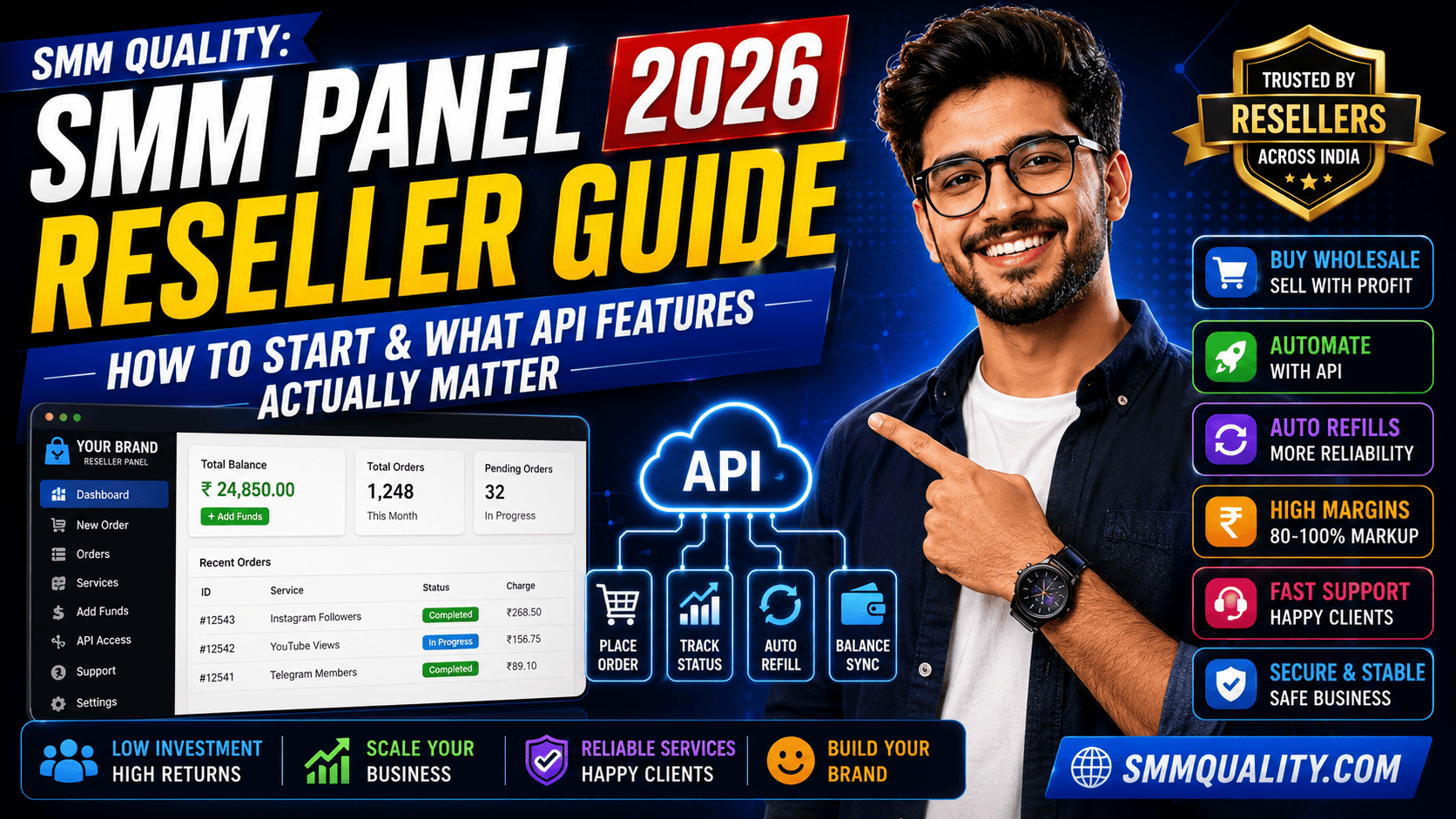
SMM Panel Reseller Guide 2026: How to Start & What API Features Actually Matter

Quick Answer: Reselling SMM services is a low-infrastructure, markup-based business: you buy services wholesale from a source panel and sell them to clients at a margin, using either manual order placement or API automation. The business itself is straightforward. What separates a reseller who scales past a handful of clients from one who stalls at ten is almost entirely operational - specifically, whether order tracking, refill handling, and balance management are automated or done by hand. This guide focuses on that operational layer, since it's the part most reseller guides skim past in favor of margin math.

What Reselling Actually Involves

A reseller buys services - followers, views, watch time, members, and similar - from a source panel at wholesale rates, then sells them to end clients at a markup. The reseller doesn't build delivery infrastructure; that stays with the source panel. What the reseller builds is the client-facing layer: pricing, a storefront or order form, support, and (eventually) automation connecting the two.

This is a genuinely low-barrier business model, and that's exactly why the competitive advantage isn't in having it - it's in running the operational side well enough that client trust compounds instead of eroding.

Where the Margin Actually Comes From, and Where It Erodes

The headline economics are simple: buy at wholesale, sell at a markup, keep the difference. An 80–100% markup is common in this space. What most guides leave out is where that margin quietly disappears:

  • Refill costs: Every service carries some drop-off risk. If a reseller doesn't build refill cost into their pricing, a bad month of high drop-off can erase the margin on those orders entirely.

  • Manual order-placement time: At low volume, placing orders by hand is free (your time). At 20+ clients, the time cost becomes real, and it's the single biggest reason resellers plateau rather than scale - not lack of demand.

  • Support overhead: A support ticket that takes twenty minutes to resolve costs more than the margin on a handful of small orders. This is invisible in a spreadsheet until volume is high enough to make it visible.

  • Underpriced entry tiers: Pricing too close to wholesale to win a client's first order, without a plan to move them to sustainable pricing later, is a common early mistake that caps growth before it starts.

What API Access Should Actually Include

Most reseller pitches list "full API access" as a feature without specifying what that means operationally. Here's what matters in practice, regardless of which source panel you use:

Feature What it should do Why it matters at scale
Order placement Accept target + service + quantity, return an order ID immediately No manual review bottleneck
Status tracking Poll an order's state (pending/in progress/complete/partial) Lets your own dashboard show clients real-time status without you checking manually
Balance management Single view across all client spend Prevents orders silently failing because an account ran dry
Refill requests Triggerable automatically against a stated threshold Turns a guarantee from a policy into an enforced behavior
Response time Consistently fast, testable directly Matters once your own dashboard is polling multiple orders live

Test this yourself before committing volume. Every one of these is verifiable with a small trial order - you don't need to take a provider's word for any of it, including SMMquality's.

A Realistic First-Month Setup

  • Start with 3–5 core services, not the full catalogue: Depth in a few reliable services builds trust faster than breadth across many untested ones.

  • Take orders manually before building a dashboard: A simple order form connected to the API is enough for the first 5–10 clients - building a full white-label dashboard before you have clients to justify it is a common wasted-effort mistake.

  • Price with refill cost built in from day one: Not added later once a bad month reveals the gap.

  • Spot-check refills manually in month one: Even if the source panel claims automatic handling - this is the fastest way to catch a configuration problem before it affects a real client.

  • Document delivery-time expectations clearly for every service you resell: Most reseller support tickets trace back to mismatched expectations, not actual delivery failures - this is fixable with upfront clarity, not more support staff.

Common Mistakes Worth Naming Directly

  • Reselling every available service instead of the handful you've personally tested

  • No buffer balance, which causes orders to fail mid-cycle

  • Pricing at a margin too thin to absorb refill costs

  • Skipping a sandbox or trial order before committing to volume with a new source panel

Reading Reseller Program Marketing Critically

A large share of content in this space - including from providers marketing themselves as "the best reseller panel" - leans on claims that are difficult to verify independently: stated user counts, order volumes, or uptime percentages with no methodology attached. As with any provider comparison, the more useful filter is what you can test yourself: place a small trial order, check the actual API response time, watch how a refill request is actually handled. A provider's own claimed statistics are a starting point for evaluation, not a substitute for testing.

This applies equally to SMMquality's own reseller program. The checklist above is meant to be run against any source panel a reader is evaluating, ours included, using a small test order rather than marketing copy as the basis for the decision.

White-Label and Child Panels: What They Actually Solve

A step up from manual reselling is a "child panel" - a fully branded storefront on your own domain, running on a source panel's backend infrastructure. Instead of taking orders through a form and placing them yourself, clients order directly through your branded site, and fulfillment happens automatically behind the scenes.

This solves a specific problem: at a certain client count, manual order placement stops being a minor time cost and starts being the actual bottleneck on growth. A child panel removes that bottleneck by letting the source panel's API handle fulfillment while you control pricing, branding, and the client relationship.

It's worth being clear-eyed about what a child panel doesn't solve. It doesn't fix a thin margin, a missing refill-cost buffer, or slow support - those are business fundamentals, not technical ones, and no amount of automation compensates for getting them wrong. A branded storefront running on a well-configured backend with weak fundamentals underneath just fails faster and at higher volume than a manual process would have.

The practical decision point: manual reselling makes sense below roughly 10–15 active clients, where the time cost of placing orders by hand is still manageable. Above that, the case for API-based automation - whether a full child panel or just automated status polling on your own simpler dashboard - becomes considerably stronger, purely on time-cost grounds rather than any specific feature checklist.

Frequently Asked Questions

Q: How much capital is needed to start reselling?

A: Enough to fund a first small client base plus a buffer for refills - commonly cited informal benchmarks in this space suggest starting small (5–10 clients) before scaling spend, though actual figures depend heavily on service pricing and client volume.

Q: Do I need a dashboard on day one?

A: No. Manual order placement through a simple form is sufficient for early clients. Automation becomes valuable once order volume makes manual tracking genuinely time-consuming, not before.

Q: What margin is realistic?

A: 80–100% markup is commonly referenced across this industry, though the sustainable margin depends on refill rates and support overhead specific to the services being resold - it's worth calculating your own numbers rather than assuming an industry figure applies directly.

Q: Is API access necessary at small scale?

A: Not strictly - but even a modest client base (10–15 accounts) benefits from automated status checks, since manual tracking at that scale is where delivery mistakes most commonly happen.

Q: How should I evaluate a source panel's reliability before committing?

A: Place a small test order and evaluate it against concrete, checkable criteria - actual response time, how a refill request is handled in practice, and support responsiveness - rather than relying on a provider's stated statistics.

Sparkhouse manages content for SMMquality; that relationship is disclosed above. This guide reflects general reseller business practices rather than claims specific to any single provider's performance, since verifiable third-party data on reseller panel performance is not publicly available in this industry.

By Vivek Mishra | SEO Specialist, Sparkhouse
Disclosure: Sparkhouse manages content and marketing for SMMquality. Where this guide references SMMquality's own reseller program, that connection is noted directly. Website: smmquality.com

Read More

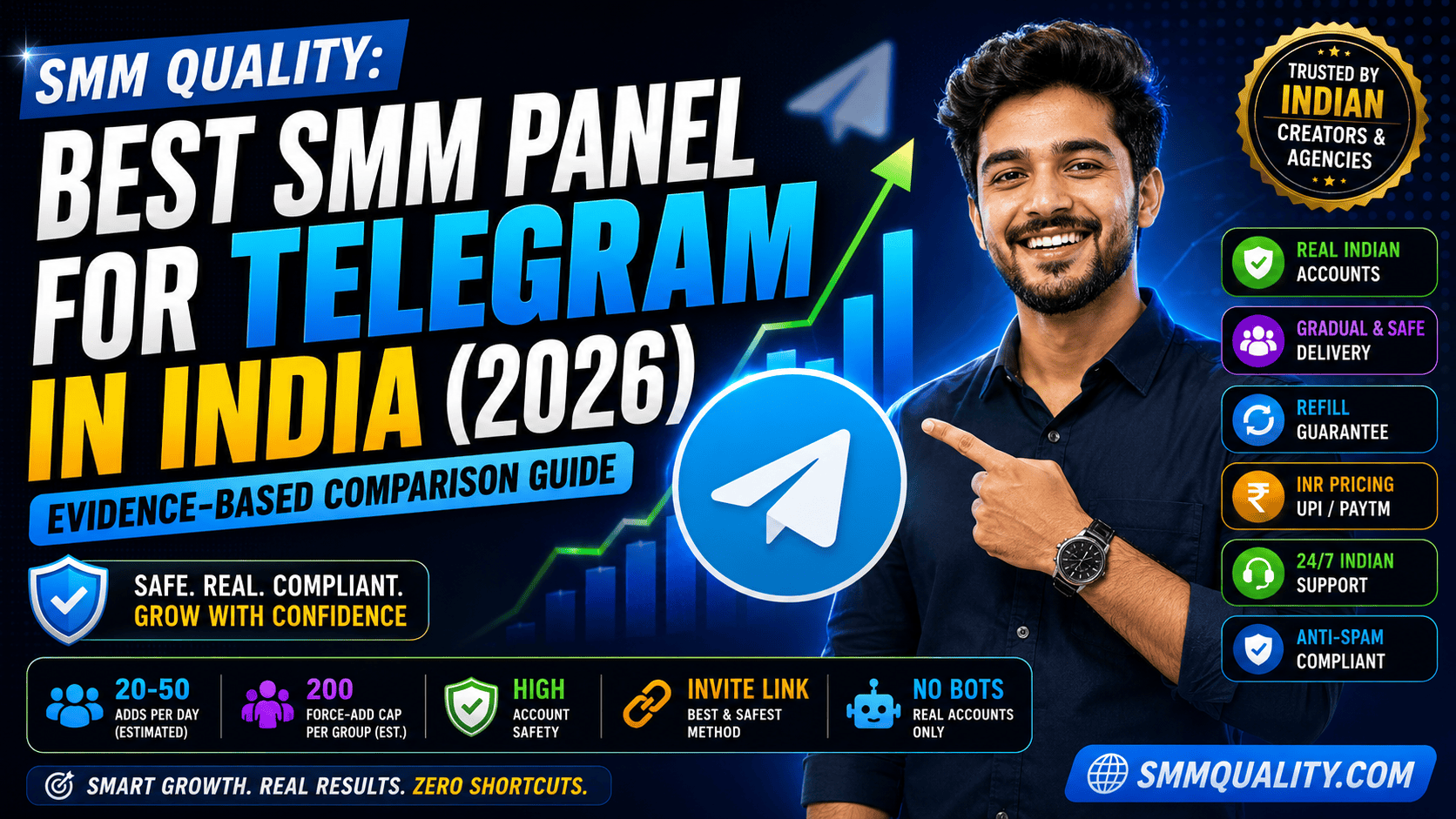
Best SMM Panel for Telegram in India (2026): An Evidence-Based Comparison Guide

Quick Answer: Telegram's anti-spam enforcement tightened substantially through 2025–2026, and the old benchmark for a "good" Telegram panel - how many members it can add per day - is now the wrong question. The right question is whether a panel's delivery method survives Telegram's own detection systems. This guide lays out an evidence-based framework for that judgment, cites what Telegram has actually confirmed versus what's third-party estimate, and is upfront about where our own service fits into that framework rather than assuming it wins by default.

Why the Old Playbook Stopped Working

A fraction of a few years ago, "buy 10,000 Telegram members overnight" was a viable pitch, because Telegram's spam detection hadn't caught up to bulk automated adding. That gap has closed. Telegram's own spam documentation describes active enforcement against accounts exhibiting spam-like behavior, including adding unusually large numbers of contacts or groups in a short window.

Independent technical analysis published through 2026 converges on a consistent picture: manual and automated adding tends to cap out around 20–50 successful adds per account per day, with force-added members in any single group generally limited to roughly 200 before further growth requires voluntary joins via invite link. One detailed guide tracking legacy "adder" tools found search demand for them fell close to 98% over the past year, attributing the collapse directly to Telegram's improved detection.

Being precise about sourcing matters here: Telegram confirms its anti-spam system exists and enforces against automated behavior, but does not publish its exact thresholds. The specific numbers above are third-party estimates, not official platform policy - treat them as well-corroborated industry observation, not platform-confirmed fact.

What Actually Changed, Technically

  • Reputation now gates volume: Multiple sources describe a hidden trust-score system where account age, report history, and behavior pattern - not just a fixed daily number - determine what a given account can do before triggering a restriction.

  • Privacy settings independently cap direct-add reach: A meaningful share of Telegram users restrict who can add them directly to groups, which limits any add method - automated or manual - regardless of how compliant it otherwise is.

  • The ban risk sits with the adding accounts, not necessarily the destination: Analysis of self-run adder scripts found the accounts performing the adds get flagged fastest, while the destination channel is a secondary enforcement target.

  • Channels and groups face different exposure: Channels grow through voluntary link-joins, sidestepping direct-add restrictions almost entirely - a distinction that should shape strategy more than it currently does across most panel marketing.

An Evidence-Based Comparison Framework

Rather than assigning invented performance scores to named competitors, here's the checklist we'd want a reader to run against any panel - SMMquality included - using criteria checkable from public documentation rather than marketing claims.

Criteria What to verify Why it's checkable, not marketing
Delivery pace Gradual (days/weeks), not instant bulk Matches the ~20–50/day pattern reported across 2026 sources
Channel/group distinction Panel documents different logic for each Groups face materially higher restriction risk than channels
Account activity disclosed Panel states what "real accounts" means concretely Vague claims like "real, not bots" without specifics are a red flag
Refill policy Written, with a trigger threshold and timeframe Distinguishes an enforced guarantee from a marketing phrase
Payment transparency INR pricing, UPI/Paytm, no hidden conversion Practical, verifiable in one checkout screen
Support response Stated channel and window, testable directly You can verify this yourself before ordering anything

Run this against SMMquality's own listed Telegram service before taking our word for it. A framework that only looks credible when applied to competitors and not to us isn't actually a framework - it's marketing wearing a checklist's clothes.

How to Grow Within These Constraints

  • Build baseline activity before ordering anything: An account or channel with no existing history gives Telegram's systems nothing positive to evaluate.

  • Default to channel growth when broadcast reach is the goal: Channels avoid the direct-add restrictions groups are more exposed to.

  • Order in small, repeated batches: Rather than one bulk purchase, even at the cost of a longer delivery window - this is closer to how organic growth already looks to Telegram's systems.

  • Match member growth to content engagement: Rising membership against flat post views is a mismatch easy for anyone, human or algorithmic, to notice.

  • Check status directly with Telegram's own @spambot: Rather than relying solely on a panel's dashboard for compliance confidence.

  • Lead with invite links over direct adds: Since privacy settings block a meaningful share of direct-add attempts regardless of method.

Reading Panel Marketing Critically (Including Ours)

Most content in this category - including plenty published under the SMMquality name elsewhere - leans on specific-sounding numbers that aren't traceable to anything: "92% retention," "98.2% non-drop rate," named case studies with round revenue figures attached. These numbers aren't necessarily false, but they're also not verifiable by a reader, which means they function as persuasion rather than evidence.

A more useful question to ask of any such claim: could I check this myself, right now, without trusting the panel's word for it? A stated refill policy with a specific trigger threshold is checkable - you can test it by ordering and watching what happens. A payment method is checkable - it's right there at checkout. A retention percentage attributed to "internal order data" with no methodology described is not checkable, regardless of how precise the decimal point makes it look.

This distinction matters more than it might seem for a content marketing piece, because it's also roughly the distinction Google's own quality-rating guidelines draw between demonstrated expertise and asserted expertise. A guide that says "trust us, we're the best" is asserting. A guide that says "here's exactly what to check, and here's where we currently fall short of having real evidence for a claim" is demonstrating something rarer: that the reader's ability to independently verify was actually considered while writing it.

None of this means every panel making a strong claim is being dishonest. It means a reader evaluating panels - Telegram or otherwise - is on firmer ground weighting checkable specifics (documented refill trigger, transparent pricing, responsive support tested directly) well above headline percentages that have no stated methodology behind them.

Frequently Asked Questions

Q: What's the actual daily limit for adding Telegram members in 2026?

A: Not officially published. Independent 2026 sources converge on roughly 20–50 per account per day, with a separate ~200-member cap on force-added members per group.

Q: Does buying Telegram members violate Telegram's terms?

A: Telegram's terms prohibit automated, spam-like behavior specifically without naming "SMM panels" as a category. The operative question is whether a given service's delivery method resembles the automated patterns those terms target.

Q: Are channels safer to grow than groups?

A: Generally, yes - channel growth happens through voluntary joins, which sidesteps direct-add limits that groups are more exposed to.

Q: How do I check if my channel has been flagged?

A: Telegram's own @spambot is the direct, first-party way to check account status.

Q: Does Telegram Premium raise the daily add limit?

A: Not officially, according to third-party analysis - but Premium accounts are reported to carry a higher trust score, which can make identical behavior less likely to trigger restriction.

Sparkhouse manages content for SMMquality; that relationship is disclosed above. Claims about Telegram's systems are cited to Telegram's own documentation where possible and clearly marked as third-party estimate elsewhere, since Telegram does not publicly disclose its exact enforcement thresholds.

By Vivek Mishra | SEO Specialist, Sparkhouse
Disclosure: Sparkhouse manages content and marketing for SMMquality. Where this guide references SMMquality's own services, that connection is noted directly rather than implied. Website: smmquality.com

Read More